flowchart RL
  B(Primary Driver) --> A(Aim)
  C(Primary Driver) --> A(Aim)
  E(Secondary Driver) --> B
  F(Secondary Driver) --> B
  G(Secondary Driver) --> C
  H(Secondary Driver) --> C
  L(Change Idea) --> E
  M(Change Idea) --> E
  N(Change Idea) --> F
  O(Change Idea) --> F
  P(Change Idea) --> F
  Q(Change Idea) --> G
  R(Change Idea) --> H
  S(Change Idea) --> H
Designing and Testing Changes
Connecting Aims with Interventions
Once you’ve decided what you want to improve (the aim), you can figure out the changes you could make (the interventions) that would lead to the improvement you’re looking for. A driver diagram can help you identify the processes involved and modifications you could make to them.
Write down the Aim that you developed in Choosing What to Improve.
Identify the Primary Drivers: What are the key factors that are most likely to influence the achievement of the aim?
Identify Secondary Drivers: For each primary driver, what are the specific factors or interventions that are necessary to achieve it?
Generate Change Ideas: For each secondary driver, what specific interventions or actions could be tested and implemented?
Worksheet
As you think about potential changes, consider not only how they will affect the improvement you’re trying to make, but also how they will affect the system as a whole, for better or worse.
Categories of Changes
Here are some types of changes you might think about:
- Agency policies and procedures
- Medical protocols
- Data system, including changes to workflow, form layouts, validation rules, or prompts
- Education/training
Education/training is not your only tool. Many people make the mistake of doing more training, when a different kind of change would be more effective. For example, training your personnel to remember to do a stroke scale on suspected strokes is not as effective as implementing a validation rule in your data system that prompts them to do a stroke scale. Remember, performance improvement is about improving systems and processes.
Example: Improving Pediatric Care
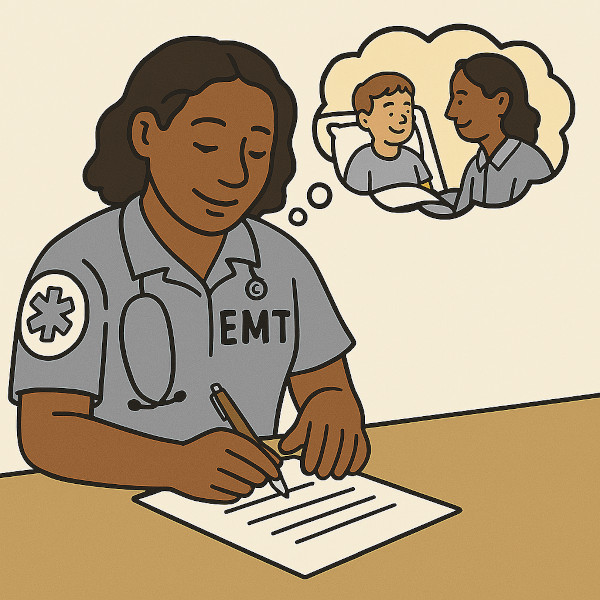 Mackenzie’s agency has decided to improve pediatric patient care. To help her think up ideas of changes she can make to improve pediatric care, she fills out the Driver Diagram Worksheet:
| Aim | Primary Drivers | Secondary Drivers | Change Ideas |
|---|---|---|---|
| Improve Pediatric Care | ←Accurate Medication Dosing | ←Documenting Weight ←Calculating Dosage |
←Move Weight to more prominent location in ePCR ←Add validation rule for weight in ePCR ←Stock length-based tape in ambulances ←Implement auto-calculation of dosage in ePCR |
| ←Pain Management | ←Documenting Pain Scale ←Giving Pain Medication |
←Add validation rule for pain scale in ePCR ←Add pediatric instructions to pain management protocol ←Stock intranasal fentanyl in ambulances |
|
| ←Minimizing Hypoxia | ←Recognizing Hypoxia ←Giving Oxygen |
←Practice taking vital signs on pediatric patients in training ←Practice applying oxygen on pediatric patients in training |
SMARTIE Changes
Now that you have some ideas of changes to try, you can develop them along the lines of “SMARTIE goals.” Make each change:
-
Specific: What exactly are you going to change, and how?
-
Measurable: How will you know change has happened? How much, or how many?
-
Action-oriented: Are there intermediate actions or milestones?
-
Relevant: Can you realistically achieve it with the resources you have?
-
Time-bound: What’s the deadline? How will you tack progress over time?
-
Inclusive: How will you include those affected by the change in your decision making?
-
Equitable: How will the change reduce inequities?
For more information, see “SMARTIE Goals” by the Oregon Health Authority.
Testing Changes
You’ve decided on a change to make. Next, test it in a small way before you implement it agency-wide. This is where Plan-Do-Study-Act (PDSA) comes in.
flowchart LR
  A(<img src="site_libs/bootstrap/images/i-act.svg"/> Act) --- B(<img src="site_libs/bootstrap/images/i-plan.svg"/> Plan)
  A --- D
  B --- C
  D(<img src="site_libs/bootstrap/images/i-study.svg"/> Study) --- C(<img src="site_libs/bootstrap/images/i-do.svg"/> Do)
-
Plan: Figure out what change you’ll make.
-
Do: Make the change.
-
Study: Check the data to see how the change worked.
-
Act: Decide what to do next:
Adopt the change agency-wide if it worked well.
Adapt the change if it partially worked but could be better. Send it back through PDSA.
Abandon the change if it didn’t work.
Testing a change in a small way might mean that you try it on:
- One unit
- One crew or shift
- One day of the week
You don’t know if a change will work until you test it, so test it in a small way before you roll it out to your entire agency.
Example: Testing a Change to Improve Hospital Relationships
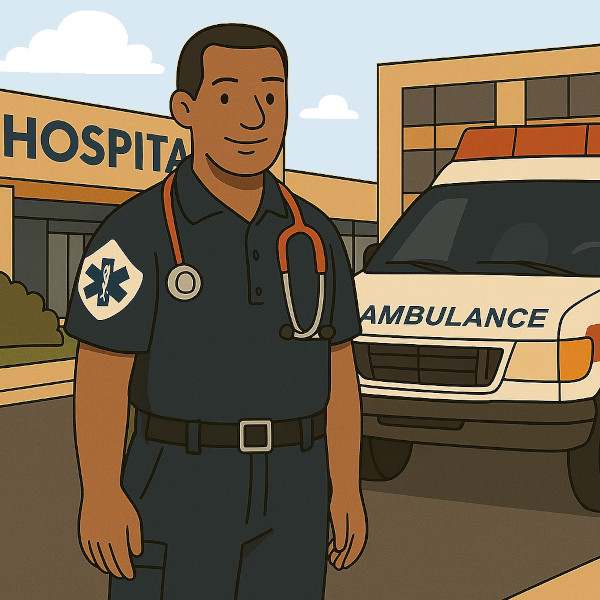 Karson has an aim to improve his agency’s hospital relationships. Using the Driver Diagram, he has identified getting patient outcome information from the hospital as a primary driver. He wants to test a change that he hopes will help his agency get outcome data more often. He tests the change idea using the PDSA cycle:
-
Plan: Karson’s plan is to add barcode scanning of hospital medical record numbers (MRNs) into his agency’s ePCRs. He works with one of the hospitals served by his agency, and they agree to add a barcode to their face sheet. He picks the “B Shift” crew in his agency to try out the change. He identifies where to add the barcode reader in the ePCR form.
-
Do: The hospital adds the barcode to its face sheet, and Karson adds the barcode reader to the ePCR. He shows the B Shift crew how to use it.
-
Study: Karson looks at the percentage of PCRs that have a hospital MRN, by crew. He sees that the B Shift crew has a higher percentage of PCRs with an MRN. He also looks at a report of average time from hospital arrival to unit back in service and sees that the B Shift crew is spending about the same amount of time at the hospital as the other crews. He talks with the B Shift crew, and they recommend moving the barcode reader to a different spot in the ePCR form.
-
Act: Karson adapts the change idea. He moves the barcode reader in the ePCR form and tests out that change. It goes well, so he starts planning the full roll-out of the change for all crews and all hospitals his agency serves.